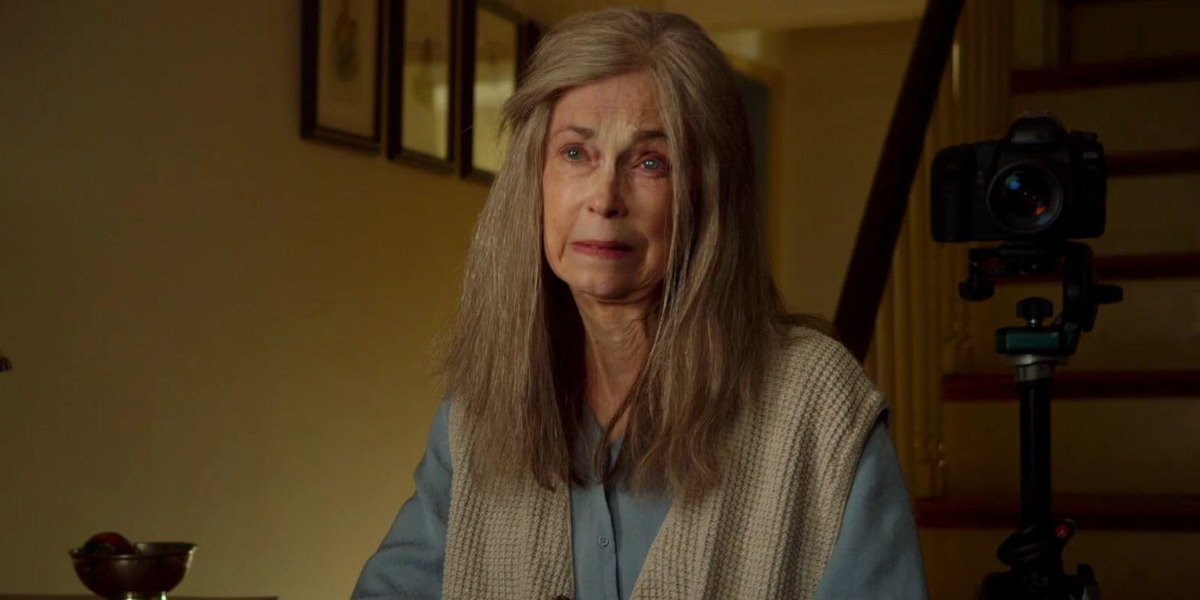
The Immediate Answer: Is M. Night Shyamalan's "The Visit" Based on a True Story?
The question, "
Is The Visit Based On A True Story?", frequently echoes among fans of M. Night Shyamalan's 2015 found-footage horror film. The film, known for its chilling premise of two children visiting their seemingly sweet but increasingly disturbing grandparents, taps into primal fears of the unknown and the uncanny within domestic settings. However, to directly address the burning question:
no, M. Night Shyamalan's "The Visit" is not based on a true story. It is a completely fictional narrative crafted by the acclaimed filmmaker, designed to thrill and unnerve audiences through its unsettling plot and unexpected twists. While the film masterfully creates a sense of dread and psychological realism that might lead some to believe it could be rooted in a real-life event, its terrifying events are purely products of Shyamalan's vivid imagination and storytelling prowess.
The film's success in making viewers question its authenticity speaks volumes about its effectiveness. Good horror often blurs the lines between fiction and reality, playing on our deepest anxieties. While "The Visit" is a work of pure fiction, it’s a natural human reaction to seek real-world anchors for stories that profoundly affect us, especially those that feel just a little too close for comfort. This phenomenon extends far beyond horror films, touching musicals, plays, and books with equally unique and compelling premises.
Why Fictional Narratives Like "Ride the Cyclone" Spark True Story Questions
It's a common thread in storytelling: when a narrative presents a particularly bizarre, specific, or emotionally resonant scenario, audiences often wonder if it sprung from actual events. This curiosity isn't limited to the horror genre but extends to works like the musical 'Ride the Cyclone', which, despite being a theatrical production, frequently prompts similar inquiries. The human mind is wired to find patterns and connections, and a story that feels "too strange to be made up" naturally leads us to ask, "Is there truth in this?"
'Ride the Cyclone', a darkly comedic and profoundly moving musical, is a perfect example of a fictional work that, due to its unique premise, often leaves fans pondering its origins. Created by Jacob Richmond and Brooke Maxwell, this musical presents a world both fantastical and deeply human, exploring themes of grief, redemption, and the search for meaning. Its intriguing setup—a group of high school choir members meeting a tragic end on a roller coaster and then vying for a second chance at life—is precisely the kind of narrative that blurs the lines between imaginative fiction and the uncanny possibility of reality. Much like how "The Visit" effectively uses a found-footage style to enhance its realism, 'Ride the Cyclone' employs a vivid, otherworldly purgatory setting and distinct character arcs to draw audiences into its compelling fictional universe.
Unpacking the Fictional Roots of "Ride the Cyclone"
'Ride the Cyclone' forms the second part of Jacob Richmond's "Uranium Teen Scream Trilogy." The musical transports its audience to the exaggerated setting of Uranium City, focusing on the chamber choir from St. Cassian High School in Saskatchewan. The core of the story unfolds after these vibrant characters tragically lose their lives on a faulty amusement park ride dubbed "The Cyclone." Their afterlife predicament places them in a dilapidated warehouse-like purgatory, complete with remnants of the defunct amusement park. Here, a mechanical fortune teller offers one of them a unique reward: a chance to return to life. To earn this coveted prize, each choir member must narrate their most compelling, untold story, vying for the fortune teller's favor.
Despite the highly specific and emotionally charged scenario, the musical is, in fact, entirely fictitious. Jacob Richmond and Brooke Maxwell crafted this imaginative world and its inhabitants from scratch, weaving a narrative that delves into profound human emotions through a quirky, supernatural lens. The setting, the characters, and the central conflict are all products of their creative collaboration.
Thematic Depth Beyond True Events
The creators leveraged this fantastical premise to explore universal themes that resonate deeply, regardless of the story's fictional nature:
- Grief and Loss: The musical confronts the raw pain of sudden, untimely death, allowing each character to process their demise and their unfinished lives.
- Redemption and Second Chances: The central conceit of the competition for a return to life acts as a powerful metaphor for humanity's desire for correction, closure, and the opportunity to make things right.
- Identity and Self-Expression: Each character's story is a profound act of self-revelation, showcasing their unique personalities, dreams, and regrets.
- The Human Experience: Through a carnival-esque lens, the musical explores the full spectrum of human emotions, from the comic to the pensive and the melancholic.
It's this rich thematic tapestry, rather than a basis in true events, that gives 'Ride the Cyclone' its powerful impact and lasting appeal. The musical invites audiences to reflect on their own lives, fears, and hopes through the exaggerated yet deeply relatable experiences of its characters.
Inspiration vs. Reality: The Creative Process Behind 'Ride the Cyclone'
While 'Ride the Cyclone' is a fictional creation, its power lies in its ability to draw inspiration from real-life emotions and artistic influences. Co-creator Jacob Richmond openly shared that a significant, devastating event in his life—the death of his sister—served as a poignant inspiration for the musical's underlying emotional current. However, he was careful to clarify that his intention was not to create an overly depressing piece but to find "evocative, sad beauty" within the narrative. This artistic choice demonstrates how personal tragedy can fuel creative expression without directly translating into a "true story" narrative. It's about distilling the *feeling* of an experience and translating it into art.
A Symphony of Genres and Influences
One of the most distinctive aspects of 'Ride the Cyclone' is its eclectic musical landscape. Unlike traditional musical theater, the score boldly incorporates a diverse range of genres, reflecting the varied personalities of its characters and the vibrant, sometimes chaotic, atmosphere of a carnival or state fair.
- Genre Exploration: Each character's narrative is intertwined with a specific musical genre, ranging from '50s rock and classical tunes to contemporary rock and rap. This eclectic mix allows for multifaceted explorations of grief and character.
- Rock Music Roots: Brooke Maxwell's compositions lean heavily into rock influences rather than conventional Broadway styles. He cites artists like Tom Waits and his work on 'The Black Rider'—known for its circus-like, theatrical soundtrack—as key inspirations.
- Bowie-esque Glam Rock: The musical features a "freewheeling glam-rock song inspired by David Bowie," highlighting the theatricality and larger-than-life aspirations of some characters.
- Diverse Musical Storytelling: From a "braggadocious rap" and a "self-centered pop ballad" to a "melancholy yet hopeful jazz funeral-inspired number," the music serves as a powerful vehicle for character development and emotional expression.
This innovative approach to music composition not only makes 'Ride the Cyclone' stand out but also emphasizes that creative works can be deeply authentic to human experience without needing to be literally "based on a true story." The artistic freedom to blend genres and draw from diverse inspirations allows for a richer, more nuanced exploration of themes that might be constrained by factual accuracy. This blend of personal inspiration, artistic influences, and pure imagination is what gives 'Ride the Cyclone' its unique voice and resonance.
Exploring Real-Life Inspirations and Creative Fiction reveals that this dynamic is common across many compelling narratives.
The Enduring Allure of "True Story" Labels in Fiction
The fascination with whether a story is "based on a true story" isn't merely about curiosity; it's about the inherent human desire for authenticity and connection. When we encounter a compelling narrative, be it the unsettling realism of "The Visit" or the fantastical yet emotionally grounded 'Ride the Cyclone', understanding its origins deepens our appreciation. A true story often lends a sense of gravity and relatability, making the unbelievable feel possible. Conversely, discovering a powerful story is entirely fictional can amplify our admiration for the creators' imaginative prowess.
For creators, the line between inspiration and fabrication is often nuanced. They might draw from personal experiences, observations of the world, or even historical events, but the resulting narrative is fundamentally a construction. This process allows them to distill complex emotions, explore challenging ideas, and create worlds that resonate without being bound by factual constraints.
Tips for Engaging with Fictional Stories:
- Embrace the Imagination: Appreciate the sheer creativity involved in crafting a unique story from scratch.
- Look for Emotional Truths: Even in fantastical settings, stories often convey universal human experiences, emotions, and conflicts that feel real.
- Research Inspirations: While a story might not be true, understanding the creators' inspirations (like Jacob Richmond's personal experiences or Brooke Maxwell's musical influences) can offer deeper insights into the work.
- Discuss and Debate: Engaging with fellow fans about a story's themes, characters, and potential meanings can enrich your experience, regardless of its factual basis.
Ultimately, whether a story like "The Visit" or 'Ride the Cyclone' is rooted in reality often matters less than its ability to move, entertain, or provoke thought. The magic of storytelling lies in its capacity to transport us to other worlds and perspectives, teaching us something about ourselves and the human condition along the way, true or not.
In conclusion, while M. Night Shyamalan's "The Visit" stands as a chilling piece of pure fiction, and the unique world of 'Ride the Cyclone' is a testament to creative imagination, the persistent question of their real-life basis highlights a profound aspect of human engagement with art. We seek truth in stories, not always in facts, but often in the universal emotions and experiences they portray. Both works, in their distinct ways, succeed because they tap into fears, hopes, and curiosities that are deeply, undeniably real.